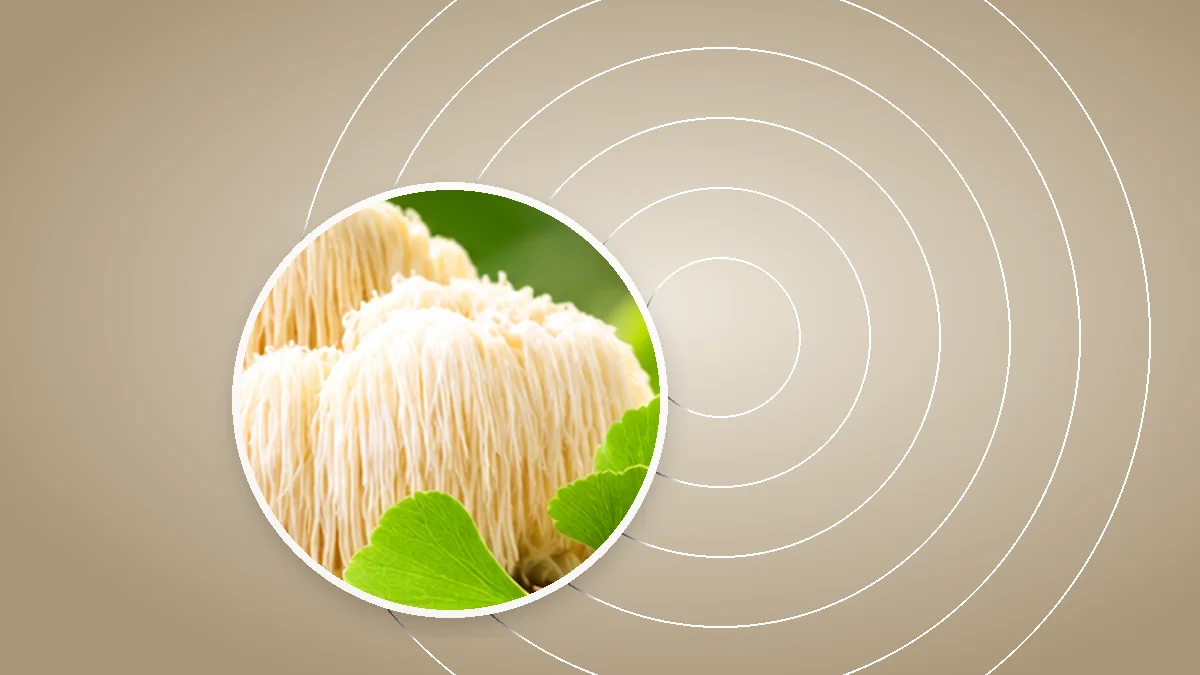
Lion's mane, known in Japan as Yamabushitake, looks like a white waterfall of soft spines. It has been eaten for centuries in East Asia and is now one of the most talked-about mushrooms in brain-health circles. Here's what the human research actually shows.
Why researchers are interested
Lab studies have found compounds in lion's mane, called hericenones and erinacines, that influence nerve growth factor in cell and animal models. That's an interesting starting point, but results in a dish or in mice don't always carry over to people.
The human trials
A frequently cited 2009 double-blind, placebo-controlled trial followed 50- to 80-year-old adults with mild cognitive impairment. Those taking lion's mane scored higher on a cognitive scale at 8, 12 and 16 weeks than the placebo group, though scores fell again after supplementation stopped. A 2019 randomized study in older adults also reported better scores on a cognitive screening test.
Studies in healthy younger adults have been more mixed, with some small positive signals and several null results. Overall, the trials are small and short, so the honest summary is: promising, not proven.
Safety basics
Lion's mane is a culinary mushroom and is generally well tolerated in studies, though anyone with mushroom allergies should avoid it. As with any supplement, check with your doctor if you take medication.
Lion's mane in Pineal Guardian X
Yamabushitake is the first ingredient the seller lists in Pineal Guardian X, alongside Bacopa, ginkgo and six other botanicals. Read the full ingredient breakdown or explore the Memory & Recall focus area.

About Pineal Guardian X
A 9-botanical liquid supplement for memory, focus and restful sleep. 30-day supply per bottle, 365-day money-back guarantee.